Sunday, 5 May 2013

FOR THE LOVE OF JAZZ

There is one museum in Genoa, bang in the city centre, next to Palazzo Ducale, which you might never even notice unless you knew that it is there: the Museo del Jazz.
   I have wanted to visit this place for a long time, but this turned out to be a bit of a mission. I knew that it is open only for couple of hours in the afternoon, but the first time I went the museum was clearly closed and I could not even see, where the entrance might be on Via Tommaso Reggio. There was no signs of the museum even existing in that place. It was a Monday, which is typically not a good day to visit any museums, but I read from somewhere that it might be open - well, it wasn't. But last week I got lucky. The very heavy doors were open, just a fraction. There was a notice in italian that the Museum is open from Tuesdays to Fridays from 5 PM to 7 PM. Bingo!

The Museo del Jazz is just next to Palazzo Ducale, the entrance is on a side street, Via Tommaso Reggio.

The glass door was closed, so I rang the bell. A very friendly, elderly Italian gentleman came to open and let me in. It was immediately clear that this is not a musem in the traditional sense and the gentleman confirmed this to be the case. It is more of an archive where jazz fans can come to listen their favourites or find recordings by a particular artist or an era in jazz, which they want to explore more. It is an amazing place and very clearly run by people who are passionate about jazz.
  The musem, which was founded in 2000,  houses over  10 000 pieces - records, CDs, cassette tapes and videos -  and the collection includes most of  the recordings ever made by Duke Ellington, Louis Armstrong, Billie Holliday and other jazz royalty. The museum also organises jazz related gatherings such as lectures of a particular artist/era/style of jazz. And if you want to learn how to play jazz, there is a music school where you could learn how to sing jazz or play sax, clarinet or other instruments. More information (all in italian) can be found from their website - www.italianjazzinstitute.com.
This sign for Lousiana Jazz Club is displayed right next to Palazzo Ducale, but the club is actually located elsewhere in the city, on Via San Sebastiano.
  The museum is attached to the Louisiana Jazz Club, which has been the centre of jazz in Genoa since 1964 and if you want to get to know the jazz scene in Genoa,  that is the place to be on most Thursday evenings (Via San Sebastiano 36). However, it is wise to check in advance on their website (www.louisianajazzclub.com), if there is anything going on. A membership card currently costs 30 euro and it is valid for the whole calendar year, giving access to all concerts at the club. 
 Heaven!


Sunday, 28 April 2013

THE SUMMER IS HERE AND A POTTED GARDEN TOO

We have had gloriously sunny, warm days in the past couple of weeks and it is safe to declare that the summer has arrived! Even though the weather is still a bit patchy with some rain every now and then, it is not too bad at all. I went for a long walk along the coastal road from Nervi to Quarto one day last week and almost on every single little beach along the way, there were ladies sunbathing in bikinis and families with children playing on the edge of the water. In the city centre of Genoa, tourists have definitely arrived too. The sightseeing buses have started to operate again after the long winter months.
 
We have been waiting for the summer to begin for another reason too.
 
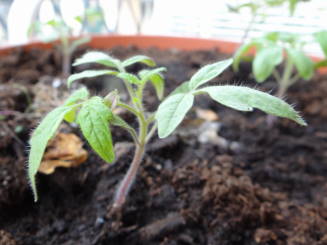
A short cold spell did not shock this little cherry tomato seedling too much.
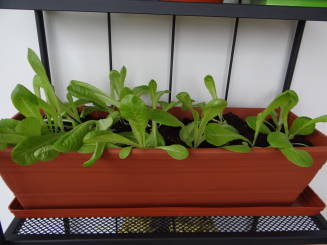
John has taken the opportunity to establish a potted garden on the covered balcony area. He has bought countless packets of seeds (basil, spring onion, chilli, tomato, eggplant...) and lots of compost & soil from the garden shop nearby. We have also invested a small fortune in all kinds of pots.


It has been quite a lot of fun to see how the tiny, tiny seedlings have pushed their way through, reaching for the sun.


The same herbs, salad  and cherry tomatoes are naturally available in the nearest grocery shop 200 metres away with fraction of the price it takes to get the seedlings to grow and survive, but it would not be as much fun to buy a very healthy looking bunch of basil at €1 per small pot... would it?

Friday, 22 March 2013

WHEN THE POST GOES MISSING

A friend decided to send me a cookery book from Finland as a present and I was really looking forward to getting it. I knew when she had mailed it, so it was just question of waiting for couple of days. But when I finally went downstairs to check the post, I was suprised to find a small box torn to pieces in the rubbish bin nearby. It had my name and address on it, but no book... 
  Since then, I have heard several stories from friends about parcels and letters which have never arrived through mail. It is not always safe to send anything from Italy to abroad either. If mail is sent to an office address, the chances of it disappearing are greatly reduced, I have been told. It is also wise to send any official, important letters by registered mail. At least you have proof that you sent it!

Thursday, 21 March 2013

AUCTION ITALIAN STYLE

Just a few minutes walk downhill from Piazza de Ferrari, in Vico Falmonica, is Cafe Cambi. Step inside and be ready for a pleasant surprise: heavy crystal chandeliers and very skillfully restored frescoes by Bernardo Strozzi from 1618, are instant reminders of a grand past of this magnificent building. Waiters in white crispy uniforms serve customers with trays full of coffee and cakes. As a visitor to Genoa, you could simply sit there, have a break and admire the historical surroundings. But there is more, much more, to this oasis in the heart of centro storico.
   The cafe is owned by the Cambi family and in the same complex is the town office the family business, Cambi Auction House, famous in Genoa. Here prospective sellers might come to meet the auctioneers and discuss some pressing business matters, such as to negotiate a sale of the contents of a family villa full of antique furniture, fine art and hand made carpets from the Orient.
   The Cambi Auction house was founded in 1998 by two brothers, Matteo and Sebastian Cambi. Two other brothers, Marcello - who is said to be the engine and soul of the whole family - and Giulio, are also very actively involved with the auction house.  A new branch was opened in Milan last year. There are 15 experts specialising in arts, design, clocks, books, oriental art and furniture.
This is just an example of items which were for sale in a recent auction held in March.
   The actual auctions happen in Castello MacKenzie, which is one of the architectually most interesting historical places in Genoa. The Cambi family bought this national monument in 2002 and it is now the headquarters of the auction house.
    The Castello was originally built between 1893 and 1905 when a Scottish insurer Evan MacKenzie commissioned a young and relatively unknown Italian architect from Florence, Gino Coppede to design it. Castello MacKenzie is open to the general public on auction days and it is possible to have a tour around the castle. It is worth reading the whole and fascinating story from the auction house's website www.cambiaste.com.
  Italian auction houses may not be as well known as Christie's and Sotheby's in London, but come to an international auction, such as the of Oriental Art auction in June last year, and you realise that Genoa might well be the place for something extraordinary and special. During that particular auction, Cambi sold an 18th century gilded and painted bronze from China for 597000 euro, a record at that time. The estimate was 20 000 - 25 000 euro.
   This year there are plenty of auctions to choose from and even if you end up buying nothing, Castello MacKenzie is certainly worth a trip.


COLOMBA PASQUALE: EASTER BREAD WITH A PEDIGREE

I am amazed how there is a special bread, biscuits, tart or sweet cake for every single national holiday in Italy! And now, as Easter is coming, the windows of local bakeries have all been decorated with special versions of the traditional Easter treat: la Colomba Pasquale.  This delicious sweet bread tastes a little bit like panettone at Christmas time, but it does not contain raisins.  Instead, there are small pieces of candied peel, such as orange. The cake is topped with sugar and almonds before being baked. It is soft, buttery and rich in taste - but surprisingly light in texture. Traditionally this sweet bread is supposed to look like a dove, but the ones I have seen here are more in the shape of the cross, rather than a bird.

Colomba Pasquale is now on the official list of traditional Italian food and it is eaten all over Italy around Easter time.

  There are many stories and legends about the origins of la Colomba Pasquale, which was first created in Lombardia. According to one story, this cake was offered as a sign of peace to the king of Longobards, Alboin, who was at war with the city of Pavia in the middle of the sixth century. 
   Another legend gives the honour to the Irish missionary St Columbanus, who arrived to Lombardia towards the end of 5th century.  He and his fellow monks were invited to a great feast by the King of Lombardia, Agilulf and his wife, Queen Theodelinda, who was a devout Roman Catholic. A big banquet with many dishes were prepared, including meat, but since it was still Lent, St Columbanus and his fellow monks did not think it was appropriate and they refused to eat meat.  did not want to offend the hostess, Queen Theodelinda, and said that they could eat meat if it was blessed. St Columbanus then raised his right hand to do the sign of the cross. The food was immediately transformed into white doves of bread. The Queen was so impressed that she decided to donate a piece of land to honour the occasion and St Columbanus founded a monastery, Bobbio Abbey, in this place.
   However, history tells us that it was actually the King who gave St Columbanus the land: he converted to Catholicism and as a thank you gave ruins of an old church and some land to St Columbanus, where he was able to build the monastery in 614. Umberto Eco's novel, Name of the Rose, is based on Bobbio Abbey.
   Sadly, the origins of Colomba Pasquale may not be so mysterious after all. It is said to have been invented by a business man from Milan, who simply decided to modify the same dough used for panettone to create an Easter bread in 1930s. It was an instant hit and was rapidly adopted by bakeries in all over Italy. Sicily has its own version of Colomba Pasquale and in the past, the cake was exchanged as a gift between lovers on Easter time and during other festivities.
  Nevertheless, it is delicious!


Tuesday, 12 February 2013

DELI IN THE HEART OF PORTOANTICO

In January/February the old harbour area, Portoantico, looks quiet but there are still good reasons to explore this area. My current favourite spot is Eataly, the delishop  dedicated to regional, mostly organic food produced by small farmers from all over Italy according to the principles of the Slow Food movement.
   The world has many reasons to be grateful to the Slow Food movement, founded in Turin in 1989 by Carlo Petrini: they were the first to make a fuss about the fast food chains and question the nutritional value of industrially produced food. Initially labelled as hopeless romantics, who wanted to take the world backwards rather than forward, it made millions of people to question where did their food come from and who produced it. Above all, the main issues were and still are, taste and quality.
 
A panoramic lift from the streetlevel takes you to the shop on  the second floor of this building, close to the Bigo. By the way, there is an excellent Italian book shop next to Eataly.
They have a small selection of books in English, if you are desparate.
   Eataly was born out of these concerns but gradually it has become a food empire with shops all over Italy. It is now a brand which has managed to get a foothold in the USA and Japan, too. It is not owned by the people behind the Slow Food movement, but it adhers to the same principles in terms of supporting small, local producers. Specialities, such as the famous, fiery chilli salami paste from Calabria called nduja, are stocked here.
   Eataly is not only a food shop. They have successfully combined the idea of a gourmet shop with an eating experience: tables cannot be booked in advance (come early for lunch), all food is freshly prepared there and then, it is easy and casual, yet tastes unbelievably good. Here you can get an impressive variety of artisan cheese, organically produced meat, deliciously fruity olive oil or unusual looking pasta produced with ancient methods. There is an outstanding selection of wine too.
   If I am quite ready to spend 6 -7 euro for a loaf of bread when I can go to my local bakery and get equally good, great tasting Tuscan style loaf with less money, is another question. The 610 euro bottle of some very special red wine would also be quite wasted on me. Eataly is not your everyday grocery store and cheap is ain't.  But as an occasional treat and for special occassion, yes please.


Monday, 11 February 2013

GENOA CITY ON A SNOW ALERT

Yesterday was a glorious, bright and sunny day, quite warm too. So warm in fact, that you could comfortably sit in a cafe at the passegiata in Nervi, read newspapers, chat with friends and enjoy watching  the sea sparkling in the sun.
However, this morning it is a different story altogether.


This was the view from the window at 8 am.
The temperature has dropped to +2 C, but with strong winds coming from the sea, it feels much colder than that. Today has been declared a day to stay inside: the city of Genoa announced yesterday that all schools will be closed because a big snowstorm is expected to hit Liguria today and therefore, everyone is on a "snow alert". During the night the mountains got covered in snow and no doubt it has snowed little bit in Genoa city too.


At noon it started snowing a bit more...

Usually, the snow quickly melts away and there is not even enough to make a snowman! This will probably be the case this time as well, even though people may have to dig out their cars from snow and there is probably some traffic chaos too.


By 5 PM the mountains had become quite a pretty sight.

When I was a child I often wished that school would be cancelled because of a snow storm, but that never happened even though the Finnish winters can be pretty harsh with temperatures well below -20 C in January/February. But on the other hand, we had central heating, snow ploughs and winter coats... no excuses whatsoever to take a day off and stay at home!